Contribution Margin Explained: What It Means and How to Calculate It
A way to measure profit using only the costs that actually move with this period's revenue and unit volume.

If you work in finance or run a company, odds are you've come across the term "contribution margin" at least once. So what exactly does it mean, and how do you calculate it?
Picture yourself as the finance lead, tasked with analyzing the profit your company generated on this period's revenue.
You pull up the income statement to run the analysis — and something looks off.
The costs that hit profit most directly — COGS and SG&A — turn out to be a blend of variable costs, which move in lockstep with revenue, and fixed costs, which have nothing to do with how revenue changes.
And that's exactly why contribution margin (CM) exists!
It's a way to measure profit using only the costs that drove this period's revenue and unit volume, separating variable costs from fixed costs in the calculation.
The profit you get when you count only the costs that moved alongside revenue and the associated unit volume is what we call contribution margin — so named because it captures how much each sale "contributes" toward covering fixed costs and, ultimately, generating operating income.
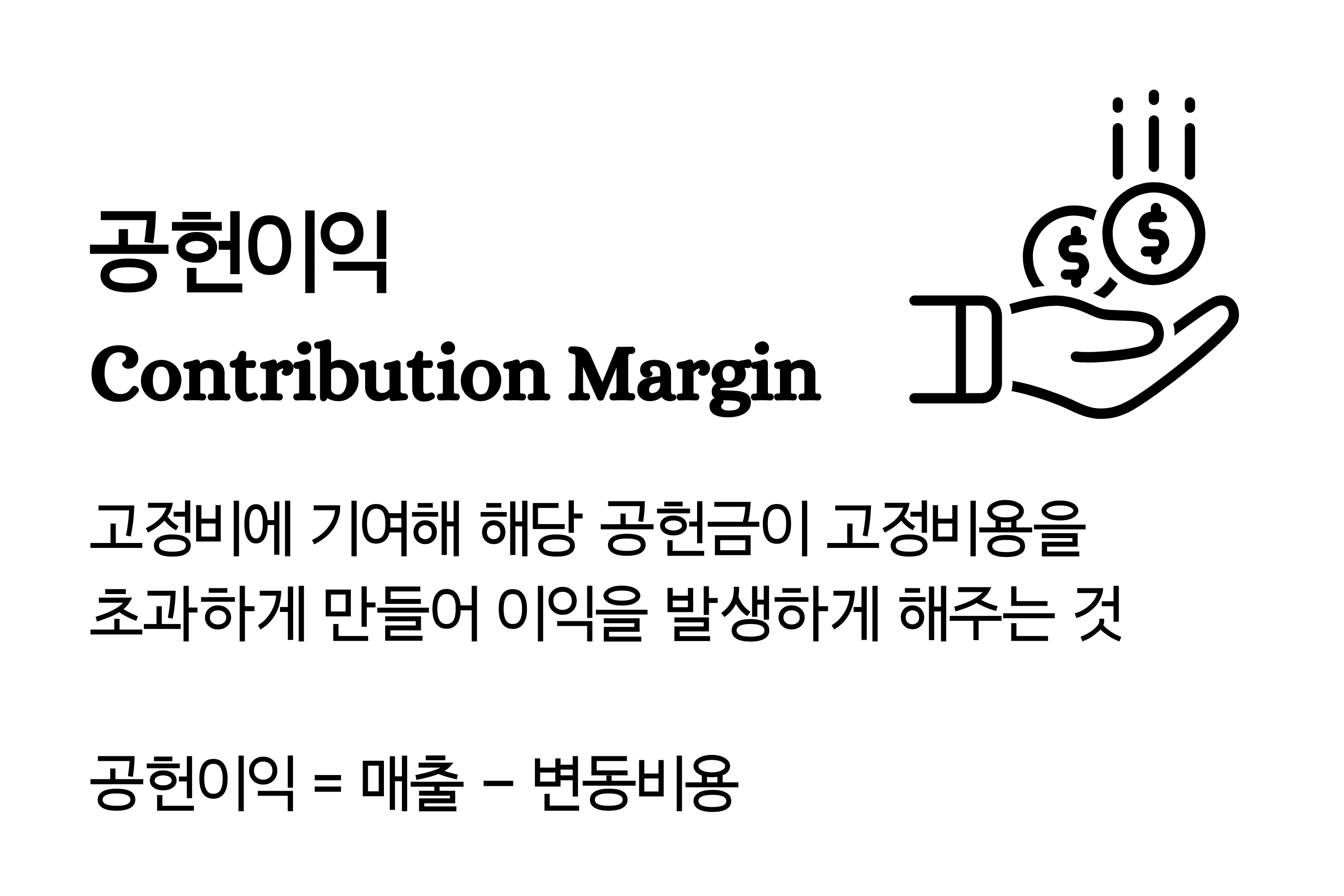
Contribution margin is calculated as revenue minus variable costs, but in practice it can also be read as "operating income plus fixed costs." In other words, it's a measure of how much of your fixed costs you've recovered on the way to generating operating income.
So how do you calculate contribution margin?
Contribution margin is, at its core, a management accounting metric — not a financial accounting one.
Put simply, it doesn't exist to publish external financial statements or to satisfy auditors; it exists purely to support sound decision-making by internal management. That's why you have to restructure the standard income statement a bit to arrive at contribution margin.
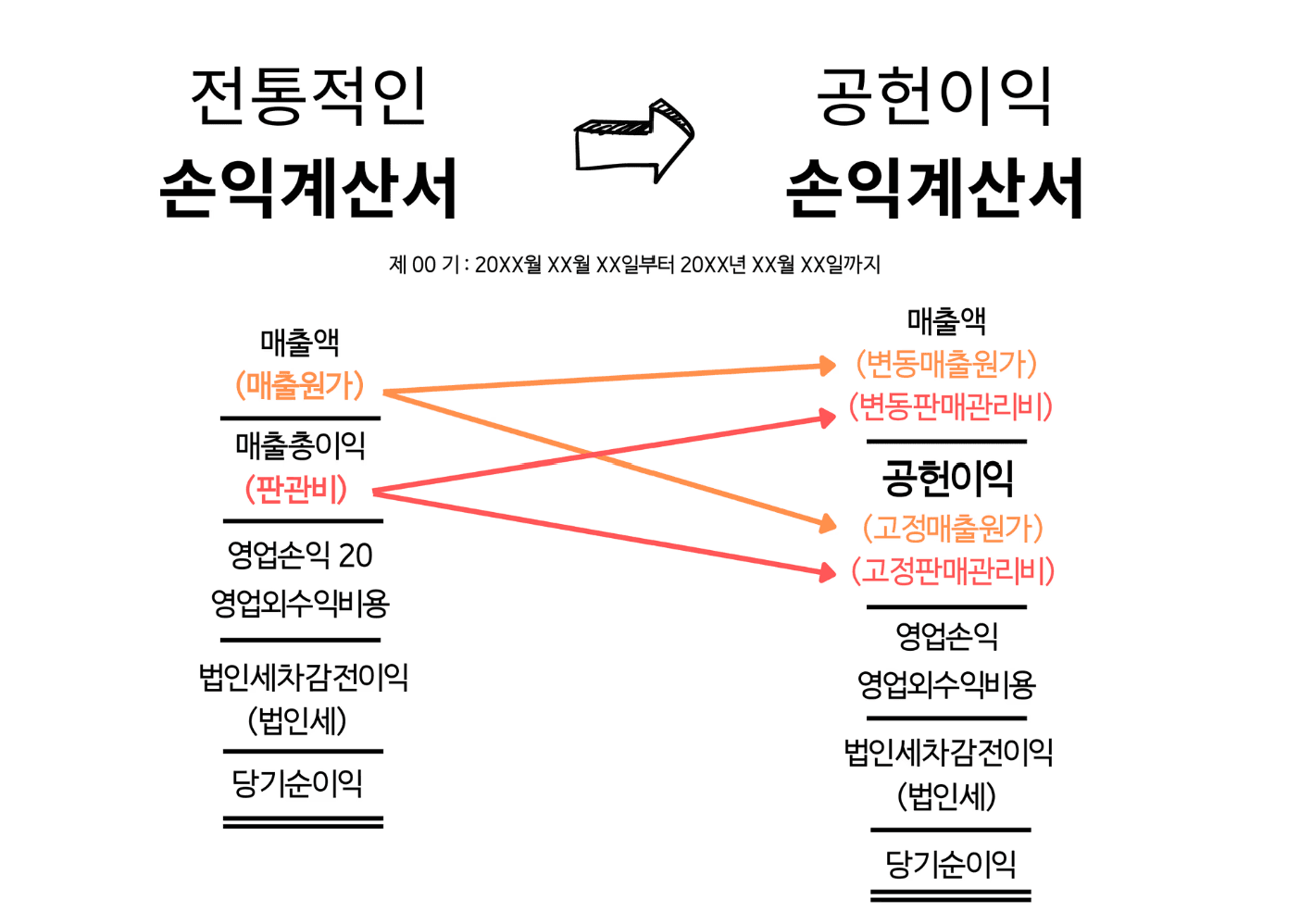
Income statement on the right: a reformatted statement that lets you derive contribution margin.
Why does contribution margin matter?
The whole point of analyzing profit isn't just to understand today's earnings — it's to forecast the future: the minimum revenue needed to secure profit down the line, and how much revenue you'd have to generate to hit a specific profit target.
In those cases, if you don't separate variable costs from fixed costs, you can't predict how costs respond as revenue changes — which leaves you unable to answer the basic question of how many units you need to sell to reach your target operating income.
So — does contribution margin make a bit more sense now? Isolating the costs that genuinely move with the revenue you're trying to manage, then analyzing, tracking, managing, and improving them accurately and on a regular cadence, is one of the most important jobs a manager or finance lead can do.
So why not reformat your own income statement right now and start managing contribution margin?
Want to calculate contribution margin with AI-driven statistics?
Get FP&A insights validated on the floor — delivered every Tuesday morning.