HR / Payroll
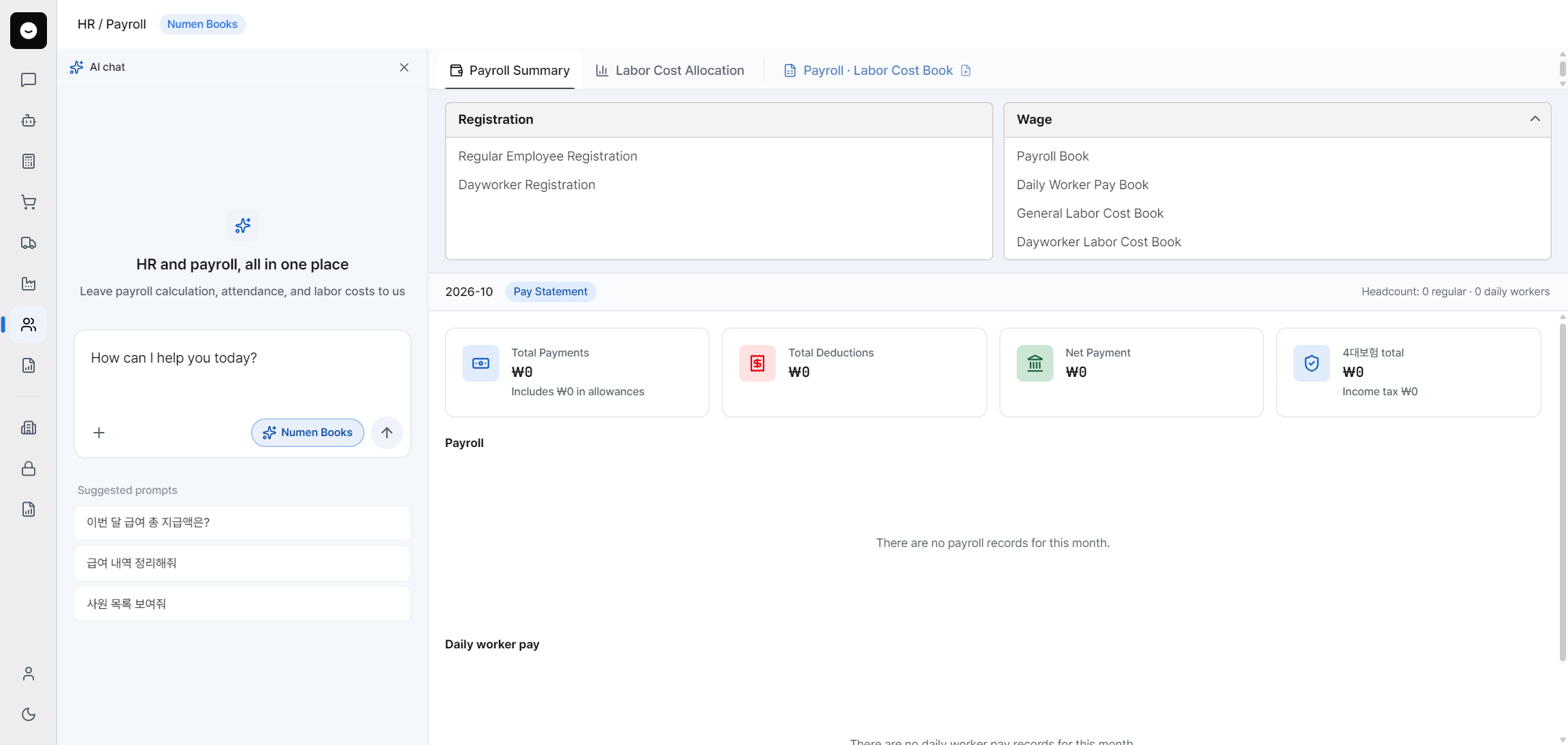
An employee registry, a standard payroll register with deduction templates, and labor-cost allocation to products. Books records payroll for management accounting — it doesn't file or pay payroll taxes.
The HR agent keeps the people and pay records your management accounting needs: an employee registry, a standard payroll register, and — most important for a manufacturer — labor-cost allocation to the cost centers and products that consumed it. Payroll-tax and social-insurance filing stays with your accountant or payroll provider.
What you can do
- Maintain an employee registry.
- Record each period's payroll in a standard payroll register — gross pay, deductions, and net pay.
- Start from deduction templates for insurance and withholding, then confirm the amounts with your accountant or payroll provider.
- Record attendance.
- Perform labor-cost allocation to cost centers and products.
How to record payroll
- 1Make sure the employee registry and attendance for the period are up to date.
- 2Enter the period's payroll — gross pay, deductions, and net pay. Deduction templates give you a starting point; use the figures your accountant or payroll provider confirms.
- 3Review and confirm the register. The AI can draft the payroll journal entry for your approval.
- 4Run labor-cost allocation to push each person's cost onto the right cost center or product.
Labor cost in your product cost
Payroll isn't just an expense line — for a manufacturer, direct labor belongs in product cost. Labor-cost allocation is the bridge: it distributes wages to cost centers and products so Production's ABC calculation can pick up accurate direct labor.